


The first 100 customers are the hardest a business ever wins, and they rarely come from spending money. A startup has no brand yet, no track record, no reviews to point to, and usually no budget to buy its way to attention. What it does have is focus, effort, and the ability to do things that do not scale, and for the earliest customers, those are worth more than any ad budget. The goal at this stage is not efficient, scalable acquisition, it is proving that people will actually pay, and learning fast from the ones who do.
This guide looks at how startups and new businesses can win their first 100 customers without a big budget, by being specific, going where those customers already are, and treating each one as a source of learning.
Get specific about who you are for
The most common early mistake is trying to appeal to everyone, which almost guarantees you reach no one, so the first move is to get narrowly specific about who your first customers actually are. A new business has limited time and money and no brand to fall back on, so spreading a vague message across a broad audience simply disappears into the noise. Choosing a tight, specific group of people whose problem you solve especially well lets you speak directly to them, show up where they are, and be worth noticing despite being unknown. It feels counterintuitive to narrow your focus when you want customers of any kind, but a sharp message to the right few beats a bland one to the many, particularly when you cannot pay for reach. Your first 100 customers are far easier to find when you know exactly who they are and what they need, so resist the urge to be for everyone and be unmistakably for someone.
Go where those customers already are
Without a budget to attract people to you, the practical path is to go to where your specific customers already gather, rather than waiting to be found. Every audience congregates somewhere, particular communities, places, conversations, events, or channels where they already spend attention, and showing up there genuinely and helpfully puts you in front of them at no media cost. This is unglamorous, hands-on work, participating, contributing, being useful and present where your customers are, rather than broadcasting into the void. It does not scale, and that is fine, because at this stage you do not need scale, you need your first hundred. A founder willing to go directly to where their customers are, and earn attention by being helpful there, can win early customers that no amount of untargeted advertising would have reached. Meet your customers where they already are, be genuinely useful, and you turn presence into your earliest sales.
Do things that do not scale
Advice built for established businesses prizes efficiency and automation, but the earliest stage rewards the opposite, doing things by hand that would never scale, because they win and teach you far more than scalable tactics can. Personally reaching out, having real conversations, giving unusual attention and care, and going out of your way for each early customer builds the trust a brandless startup cannot buy and generates the loyalty and word of mouth that get you the next customers. These hands-on efforts do not scale, but your first 100 customers do not require scale, they require winning real people one at a time and learning intensely from each. Founders who insist on only scalable tactics too early starve themselves of both the customers and the lessons that unscalable effort provides. Embrace doing things that do not scale while you are small, because that personal effort is precisely what wins early customers and teaches you what actually works, and you can build systems later once you know.
Make the most of every early customer
At this stage each customer is worth far more than the sale, because they are your best source of learning, credibility and referrals, so make the most of every one. Talk to them, understand why they bought and whether you truly solved their problem, and let that shape what you build and how you sell, since these early lessons are worth more than the revenue. Turn satisfied early customers into proof, their experiences and words become the credibility a new business otherwise lacks, and into referrals, because a delighted early customer is your most persuasive marketing. A single early customer, treated well and learned from, can lead to several more through what they teach you and whom they tell. Startups that treat early customers as mere transactions waste their most valuable asset, while those that mine each one for learning, proof and referrals compound their way toward the next hundred. Make every early customer count for far more than their order, and they will carry you forward.
Build the foundations that let you convert
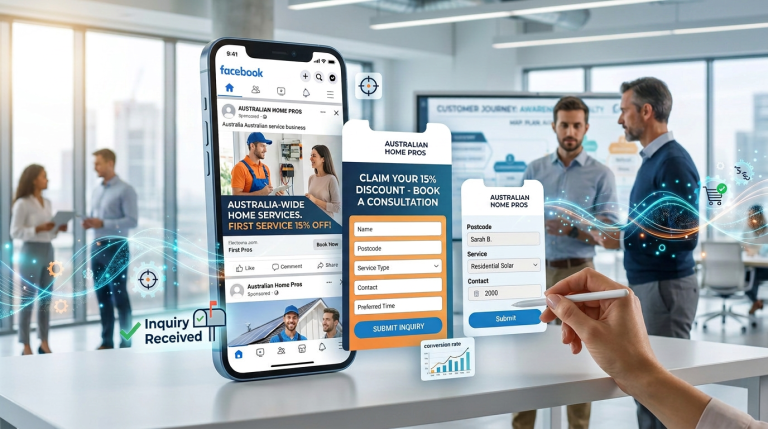
Even without a big budget, a new business needs the basic foundations that turn hard-won attention into customers, or its scrappy effort leaks away at the last step. A clear, credible website that quickly explains who you help, what you do and why you can be trusted gives interested people a reason to act rather than hesitate. A simple, reliable way to capture and respond to enquiries fast means the interest you work so hard to earn is not lost to slow or missing follow-up, and a little automation keeps that dependable even for a tiny team. These foundations do not require large spending, just care and clarity, and they make every bit of effort go further by converting more of the attention you attract. A startup can win early customers through sheer effort, but weak foundations quietly waste that effort, so getting the basics right ensures the people you reach actually become customers. Build the simple foundations that let you convert, and your hard-won attention turns into your first hundred.
A practical example
Consider a new business eager to grow but with almost no budget, tempted to spend what little it has on broad advertising in the hope of attracting customers of any kind. That instinct would scatter a vague message across an audience that does not know or trust it, and quietly vanish. Instead, the founder takes the harder but far more effective path suited to the earliest stage.
They get specific, choosing a tight group of people whose problem they solve especially well, and craft a sharp message for exactly them. They go directly to where those customers already gather, showing up genuinely and helpfully rather than waiting to be found. They do things that do not scale, reaching out personally, having real conversations, and giving each early customer unusual care, which builds trust no ad could buy. They make the most of every customer, learning why they bought, turning their experiences into credibility, and earning referrals from the delighted ones. And they put simple foundations in place, a clear website and fast, reliable follow-up, so the attention they earn actually converts. The first customers come not in a flood but steadily, won one real relationship at a time, each teaching the business something and often leading to the next. Without spending much at all, the founder reaches their first hundred customers and, just as valuably, learns exactly what works, which is the foundation everything scalable is later built on.
How Webrr Digital can help
Webrr Digital helps businesses grow through practical digital systems that bring together websites, SEO, AI visibility, automation and advertising. For startups and new businesses, we help you build the simple foundations that convert hard-won early attention into customers, a clear and credible website and fast, reliable follow-up, so your effort is not wasted at the last step. When you are ready to grow beyond the first hundred, we help you turn what worked into a system. If you are chasing your earliest customers, our website and follow-up work is built to make every bit of effort count.
Frequently asked questions
Do I need a big budget to win my first customers?
Why should a new business narrow its focus?
What does doing things that do not scale mean?
Why treat early customers as more than sales?
What foundations does a startup actually need?
Ready to win your first customers?
Your first 100 customers come from focus and effort, not big spending, but they convert far better on solid foundations. If you want help building the basics that turn early attention into customers, the Webrr Digital team can show you how.