



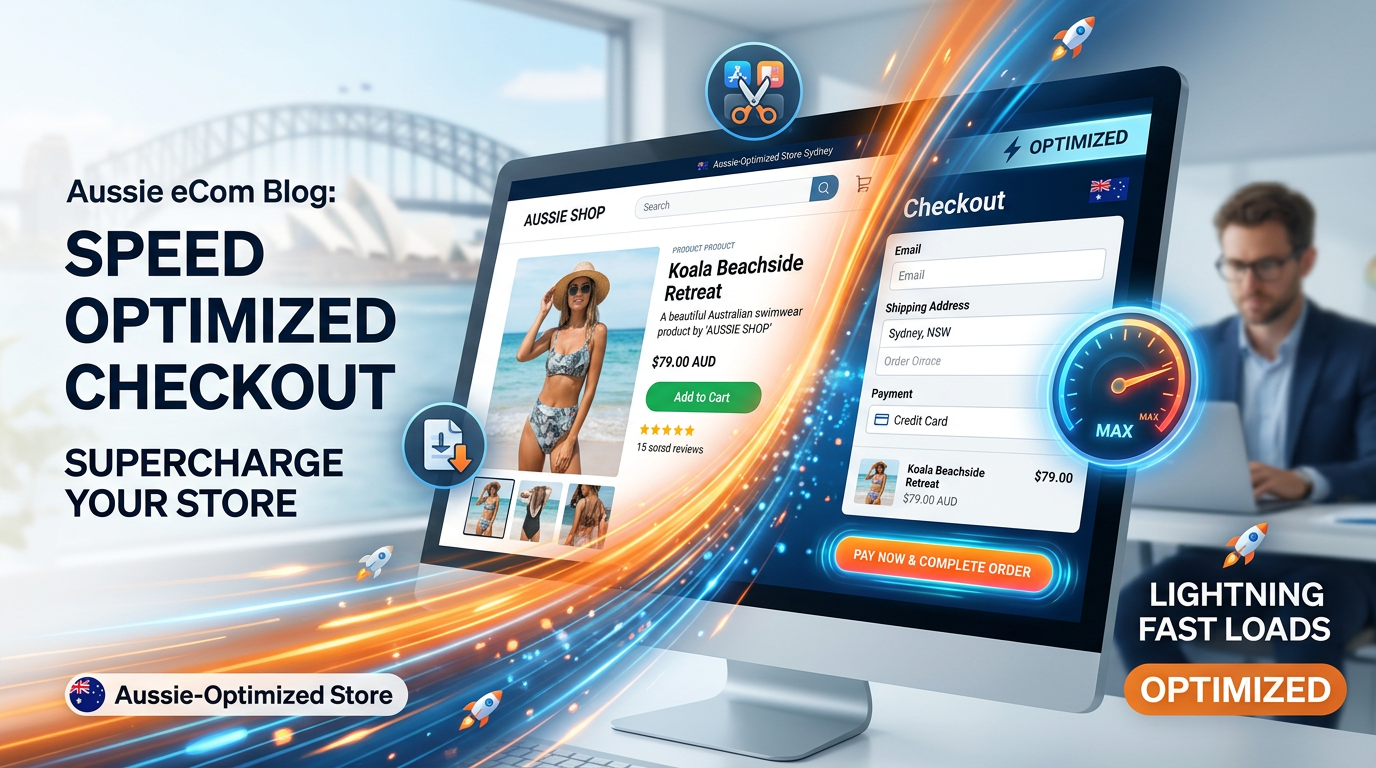
In eCommerce, speed is not a technical nicety. It is revenue. Every extra second a page takes to load costs you completed purchases, because online shoppers are impatient and alternatives are only a tap away. A slow store quietly bleeds sales at every stage, from the first product view to the final checkout. The good news is that most slow stores have clear, fixable bottlenecks, and you do not need to rebuild everything to find real gains.
This guide is a practical checklist for turning a slow Australian eCommerce store into a fast one, with the focus on the changes that have the biggest impact on sales.
Why speed is revenue in eCommerce
Online shopping is a chain of small decisions, and every delay gives the shopper a reason to abandon the journey. A slow product page loses people before they see what you offer. A sluggish cart or checkout loses them at the most valuable moment of all, when they were ready to buy. Unlike a physical shop, where a customer has already made the effort to visit, an online shopper can leave in an instant and buy elsewhere with no friction. So speed directly determines how many shoppers complete each step and reach a purchase. It also affects search visibility, because search engines favour fast pages, meaning a slow store is harder to find as well as harder to buy from. In eCommerce, speed is tied to sales at every stage, which is why it deserves priority, not afterthought.
Images are usually the first culprit
On most stores, oversized images are the biggest single cause of slowness. Product photos are essential, but images far larger than the page needs force every shopper to download unnecessary weight, slowing everything down. Because stores are image-heavy by nature, this problem is often severe. The fix is straightforward and non-technical, make sure every image is sized and compressed appropriately for the web without sacrificing the quality shoppers need to see the product. This single habit often produces the biggest speed gain available to a store, and it requires no coding. Given how many images a typical store carries, getting them all right, and keeping new ones optimised as products are added, is one of the highest-return speed tasks in eCommerce, and one of the most commonly neglected.
Trim the apps and extras
eCommerce platforms make it easy to add apps, plugins and features, and over time stores accumulate many, each adding weight that slows the store down. Some are essential, but many are unused, redundant, or not worth their performance cost. Reviewing what your store actually loads and removing the extras that are not earning their place lightens the store and speeds it up. This is straightforward housekeeping, ask of each app whether it is genuinely needed, and remove those that are not. Stores are particularly prone to this kind of accumulation, so the gains from trimming can be significant. A lean store with only the apps it truly needs loads faster than one weighed down by a pile of features nobody uses, and shoppers feel the difference at every step.
Protect the checkout above all
While speed matters everywhere, the checkout is the most valuable part of the store to keep fast, because it is where ready-to-buy shoppers are most easily lost. A shopper who has chosen a product and started to check out is worth protecting above all, and a slow or clunky checkout loses them at the exact moment they were about to pay, which is the most expensive kind of loss. Making sure the cart and checkout are fast, smooth and frictionless protects the sales you have almost secured. If you prioritise speed anywhere, prioritise it here, because a fast checkout directly converts intention into completed purchases, while a slow one throws away shoppers who had already decided to buy. Every second saved at checkout is a second less for a ready buyer to reconsider or lose patience.
Sensible hosting and a solid foundation
Where a store is hosted affects its speed significantly. Cheap, overloaded hosting can make even a well-optimised store feel slow, because the server itself responds slowly to every shopper. A store, with its traffic and transactions, needs hosting suited to the job, and hosting that is too cheap is a false economy that costs sales. You do not need the most expensive option, but you do need a solid foundation that responds quickly. This is one area where underinvesting quietly undermines everything else, because no amount of image optimisation or app trimming fully compensates for a slow server. A fast online store needs a fast foundation beneath it, and sensible hosting provides exactly that, letting all your other optimisations deliver their full benefit.
A practical example
Consider an online store that is losing sales to slowness without fully realising it. Its product pages are heavy with oversized images uploaded straight from a supplier. It has accumulated a pile of apps over the years, several unused. Its checkout is sluggish, losing ready buyers at the final step. And it sits on cheap hosting that responds slowly to every shopper. Sales are leaking at every stage, and the owner assumes fixing it means an expensive rebuild.
The fixes are more practical than feared. The store compresses and right-sizes its images across the catalogue, dramatically reducing page weight. It audits its apps and removes the ones not earning their place. It focuses particular attention on making the cart and checkout fast and frictionless, protecting its most valuable moment. And it moves to sensible hosting that responds quickly. None of this is a full rebuild. Yet the store now loads in a fraction of the time. Shoppers stay instead of abandoning, more product views become add-to-carts, more carts become completed purchases, and search visibility improves because the store is faster. Sales rise across the board, not from more traffic, but from a faster store that stops bleeding sales at every stage. The owner discovers that turning a slow store fast was a checklist of practical fixes, not a daunting rebuild.
How Webrr Digital can help
Webrr Digital helps businesses grow through practical digital systems that bring together websites, SEO, AI visibility, automation and advertising. For online stores, we work through the changes that most affect sales, right-sizing images, trimming unnecessary apps, protecting the checkout, and ensuring solid hosting, so your store loads fast and stops leaking sales at every stage. If your store is slow, our ecommerce and website work is built to make it fast.
Frequently asked questions
Why does eCommerce speed matter so much?
What is the most common cause of a slow store?
Why prioritise the checkout for speed?
Do too many apps really slow a store down?
Do I need a full rebuild to make my store fast?
Is your store bleeding sales to slowness?
A practical checklist can turn a slow store fast and lift sales at every stage. If you want help working through it, the Webrr Digital team can make your store quick.