
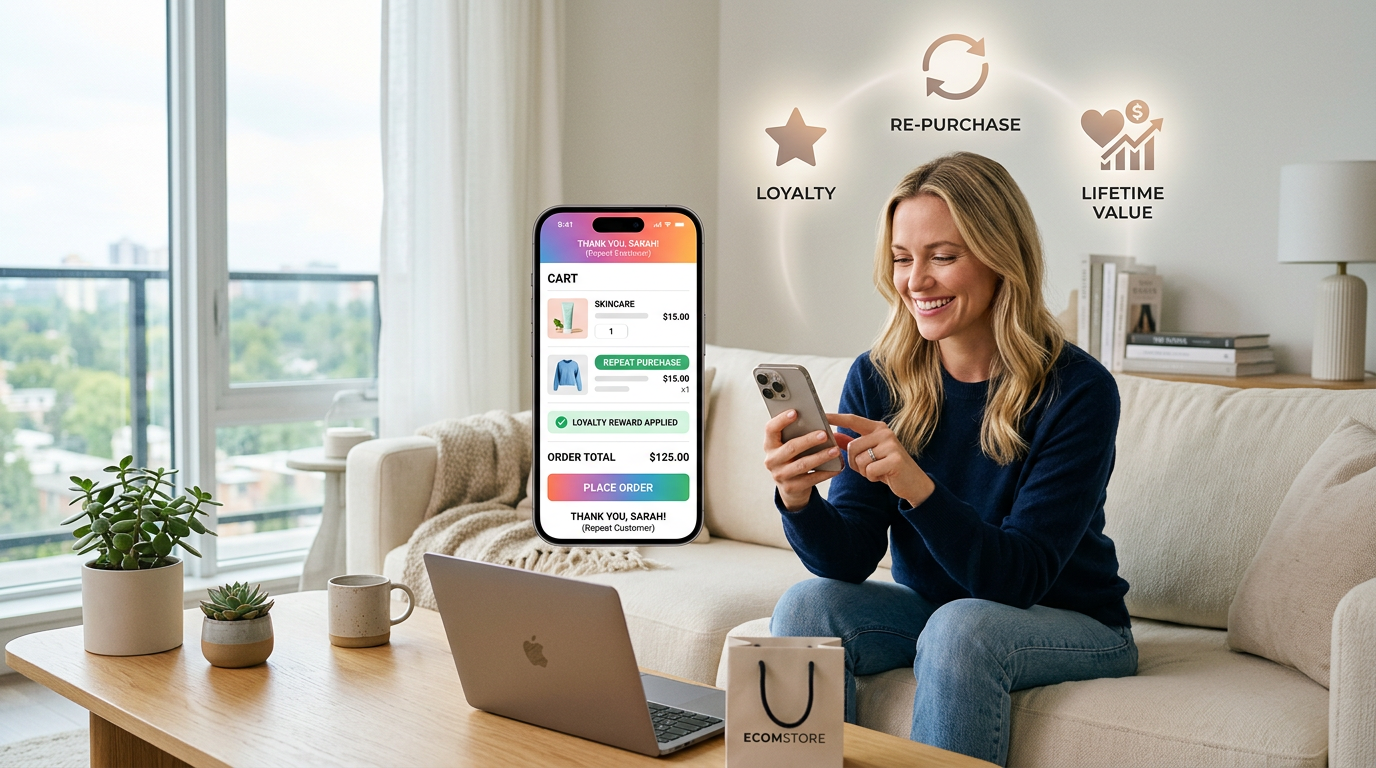
Winning a customer’s first order is the hard, expensive part. You pay to be seen, compete on price and range, overcome the hesitation of buying from someone new, and often make little or no profit on that first sale once acquisition costs are counted. The profit lives in the second order, the third, and the tenth, from customers who cost nothing more to win and who buy with growing confidence. Yet many stores pour everything into acquiring first-time buyers and almost nothing into keeping them, then wonder why growth feels like running to stand still.
This guide looks at why repeat customers matter so much in eCommerce, why stores lose buyers they could keep, and the practical steps to turn a first purchase into a lasting one.
Why the second order is where the profit is
In eCommerce, the economics of a first order and a repeat order are completely different, and understanding that gap changes how you invest. A first order often barely breaks even once you account for the cost of acquiring the customer, discounts to win them, and the friction of a first purchase. A repeat order carries none of that acquisition cost, because you already have the customer’s attention and trust, so far more of its value is profit. A customer who buys once and disappears may have cost you money, while one who buys repeatedly becomes steadily more profitable with each order. This is why customer lifetime value, not the first sale, is the real measure of eCommerce success, and why retention deserves serious investment rather than being an afterthought. A store that only optimises for first orders is building on sand, while one that turns buyers into repeat customers compounds the value of every acquisition it makes.
Why stores lose buyers they could keep
Most stores lose repeat business not because their product or service disappointed, but because they do nothing deliberate to bring the customer back. A buyer completes an order, has a perfectly good experience, and then hears nothing, so the store fades from memory in a crowded market full of alternatives clamouring for attention. When the customer next needs something, there is no particular reason your store comes to mind, and they buy wherever an ad or a search happens to lead them, often a competitor. The relationship, briefly established by the first purchase, is simply allowed to lapse through neglect. This is the quiet leak in most stores, satisfied first-time buyers forgotten the moment their order ships. Recognising that repeat business is usually lost to silence, not dissatisfaction, points straight to the fix, which is to stay present and relevant so the customer remembers you when the next need arises.
Make the first experience worth repeating
Repeat business is earned in the first experience, so the surest foundation for retention is making that first purchase genuinely good from browse to delivery. A fast, clear, trustworthy online store, an easy checkout, accurate information, and reliable fulfilment all shape whether a first-time buyer finishes thinking they would happily buy again. Friction, confusion or a disappointing post-purchase experience does the opposite, quietly ensuring the first order is also the last, no matter how much you spend trying to bring them back. You cannot nurture your way out of a poor first experience, because the memory works against every later invitation. Getting the fundamentals right, so the first purchase leaves the customer confident and satisfied, is therefore the precondition for everything else. Make the first experience worth repeating, and retention becomes possible, neglect it, and no amount of follow-up will save the relationship.
Capture permission and stay in touch
You can only bring a customer back if you have a way to reach them, so capturing permission to stay in touch, at or around the first purchase, is essential to retention. With that permission, you can remain present in a welcome way, thanking the customer, sharing genuinely useful or relevant messages, and reaching out with reasons to return rather than constant noise. The aim is to stay in memory as a store worth coming back to, without becoming the sender of email people delete on sight, which is a matter of relevance and restraint. Without any way to reach past buyers, every customer is a stranger again next time and you must pay to win them back through advertising, while with it you can bring them back far more cheaply and reliably. A simple, well-designed follow-up system, supported by sensible automation, makes this consistent rather than dependent on remembering. Capture permission and use it thoughtfully, and you keep the door open to every future order.
Give customers a reason to come back to you
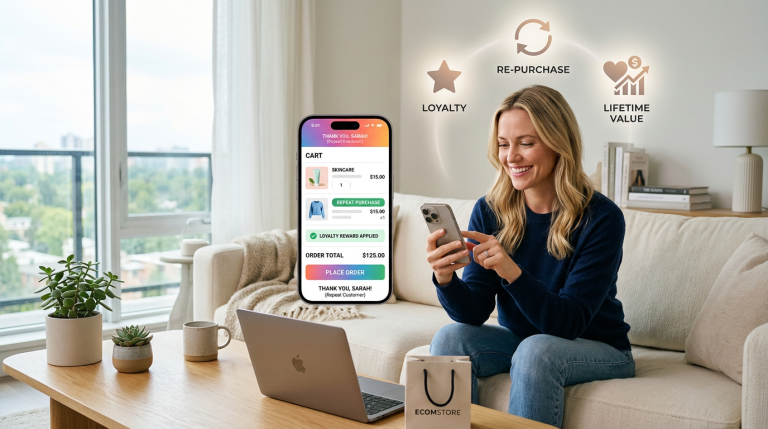
Staying in touch keeps you in memory, but customers still need a reason to choose your store specifically next time, so giving them one turns goodwill into repeat orders. That might be a genuinely useful reminder when they are likely to need more, a returning-customer benefit, a loyalty perk, or simply the confidence and ease of buying again from a store they already trust and that already knows them. Because a repeat order is so much more profitable than a first one, you can afford to reward loyalty and still come out well ahead. A customer deciding where to buy again is easily won by the store that makes returning both easy and rewarding, and easily lost by the one that offers no reason to prefer it over the next ad they see. Combine a good first experience, thoughtful ongoing contact, and a real reason to return, and first-time buyers become repeat customers, then loyal ones whose lifetime value dwarfs the cost of winning them.
A practical example
Consider an online store that is skilled at acquisition but poor at retention. It spends heavily to win first-time buyers, converts them, ships their orders, and then goes silent, doing nothing to bring them back. Its customers are satisfied but forgotten, so when they next need something they buy wherever an ad or search leads, frequently a competitor, and the store keeps paying to win people it had already won. Its growth stalls, because every new customer barely replaces one quietly lost, and acquisition costs keep climbing.
It shifts its focus to lifetime value. First it tightens the first experience, making its store fast and trustworthy and its fulfilment reliable, so a first order leaves customers happy to buy again. It captures permission to stay in touch and uses it thoughtfully, remaining present with relevant, welcome contact rather than noise, all handled by a simple follow-up system. And it gives returning customers a real reason to come back, a loyalty benefit funded comfortably by the higher margin on repeat orders. The effect compounds. A growing share of buyers order again, each repeat order far more profitable than the first, so the value of every acquisition multiplies instead of ending at a single sale. The store spends less chasing strangers and earns more from the customers it already has, and its growth steadies onto a firmer foundation, which is exactly what turning first-time buyers into repeat customers is meant to deliver.
How Webrr Digital can help
Webrr Digital helps businesses grow through practical digital systems that bring together websites, eCommerce stores, SEO, automation and advertising. For online retailers, we help you make the first purchase worth repeating, capture permission and stay in touch in a way customers welcome, and give them a real reason to buy again, so more first-time buyers become loyal, profitable regulars. If your acquisition is strong but your retention is leaking, our store and follow-up-system work is built to fix it.
Frequently asked questions
Why is a repeat order more profitable than a first one?
Why do stores lose first-time buyers?
Does retention start before the first purchase is complete?
How do I stay in touch without annoying customers?
Do loyalty rewards hurt margin?
Want customers who keep coming back?
In eCommerce, retention is where the profit is. If you want help turning first-time buyers into loyal repeat customers, the Webrr Digital team can show you how.