
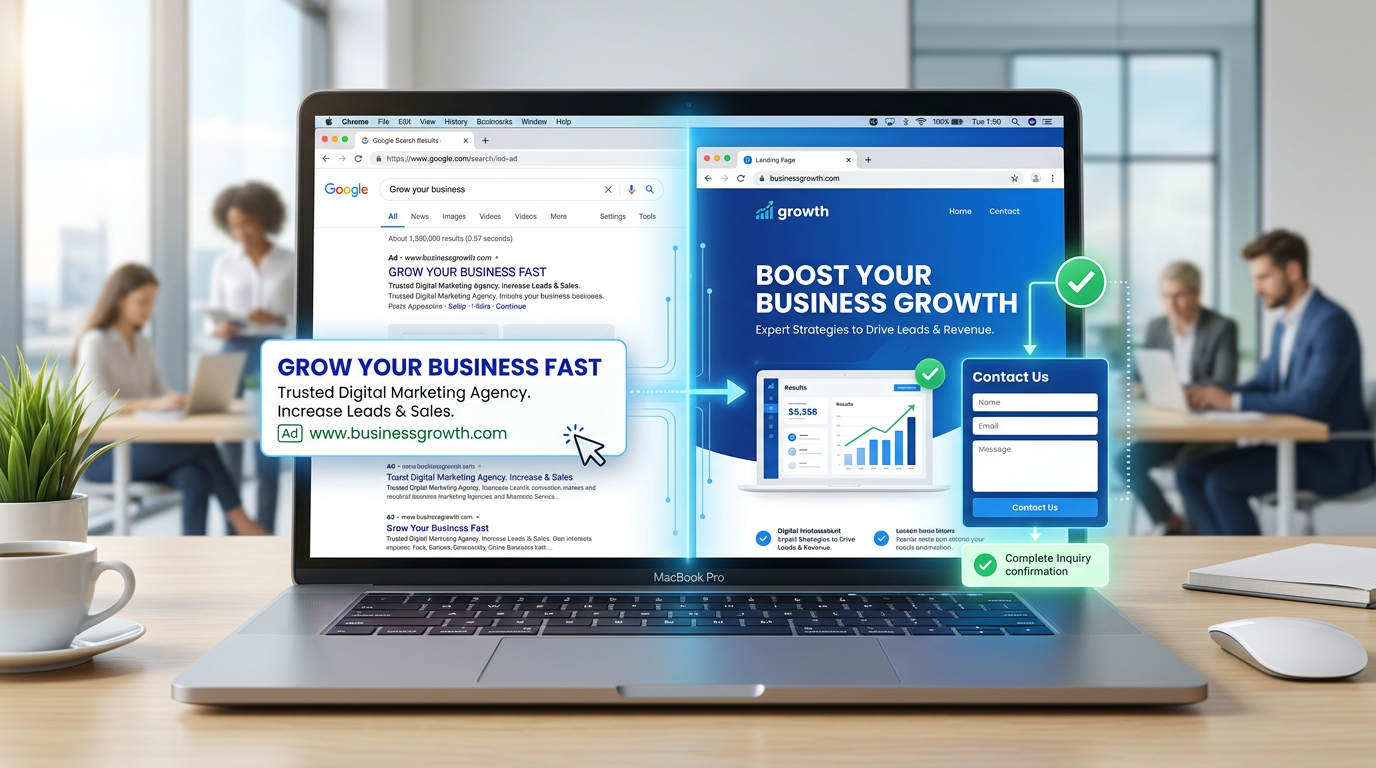
A clever ad that wins the click but disappoints on arrival is a wasted click you paid for. It is one of the most common and expensive mistakes in Google Ads. The best ad copy does more than earn the click. It sets an honest expectation that the landing page then delivers, so the visit turns into an enquiry rather than an instant bounce.
This guide explains how businesses can write Google Ads copy that survives the click, the thinking behind it, and how to keep the ad and the page working as one continuous conversation that converts.
The click is only half the job
It is easy to judge an ad by its click-through rate, but a click is not the goal. A booked job or a genuine enquiry is the goal. An ad can be brilliant at winning clicks and still fail the business if those clicks land on a page that does not match the promise. When the ad says one thing and the page says another, the visitor feels a small jolt of confusion or disappointment, and many simply leave. That click cost you money and produced nothing. Judging ad copy only by clicks therefore misses the point, because the real measure is whether the click survives the arrival and becomes an enquiry. Writing copy that survives the click means thinking beyond the click itself to what happens the moment the visitor lands, which is where the money is actually made or lost.
Match the ad to the page
The single most important principle for copy that survives the click is a match between the ad and the landing page. The visitor clicked because the ad promised something, so the page they arrive on must clearly deliver exactly that. When the ad and the page align, mentioning the same offer, the same service, the same message, the visitor feels reassured they are in the right place and continues toward enquiring. When they do not align, the visitor feels a jarring mismatch and leaves. This alignment, often called message match, is what makes an ad and its landing page feel like one continuous conversation rather than two disconnected experiences. Getting it right protects every click you pay for, while getting it wrong wastes them, however good the ad or the page is on its own.
Set honest expectations
Good ad copy sets an expectation the page can genuinely meet, which means being honest rather than merely enticing. It is tempting to write copy that promises whatever wins the most clicks, but if the page cannot deliver on that promise, the clicks are wasted and the visitor is left disappointed. Copy that overpromises attracts clicks that bounce, costing money and eroding trust. Copy that sets an honest, appealing expectation attracts visitors who find what they were promised and are far more likely to enquire. Honesty here is not a limitation, it is what makes the click productive. The aim is to be genuinely appealing while promising only what the page delivers, so the visitor’s expectation is met on arrival rather than betrayed. Honest copy that survives the click beats clever copy that wins the click and then disappoints.
Speak to the visitor’s intent
Copy that survives the click speaks to what the searcher actually wants, their intent, rather than just describing your business. Someone searching has a specific need, and copy that clearly addresses that need, and a page that continues to address it, keeps the visitor engaged from search to enquiry. Copy that ignores the searcher’s intent, talking about the business rather than the visitor’s problem, fails to connect even when it wins a click, because the visitor does not feel understood. Understanding the intent behind the searches you are bidding on, and writing both the ad and the page to address that intent, creates a coherent experience that carries the visitor toward acting. This intent-focused approach is what turns a click into an enquiry, because it keeps the whole journey centred on the visitor’s need rather than the business’s message.
Write the ad and page together
Because the ad and the page must work as one, the most reliable approach is to write them together rather than separately. When the ad copy and the landing page are created as a single, coherent experience, they naturally align, set consistent expectations, and speak to the same intent. When they are written separately, by different people or at different times, mismatches creep in, the ad promises one thing and the page emphasises another, and clicks are lost in the gap. Treating the ad and the page as one continuous conversation, planned together, is what produces copy that survives the click. This is a simple discipline that many businesses skip, writing the ad in isolation and pointing it at whatever page exists, which is precisely why so many pay for clicks that bounce. A joined-up Google Ads approach keeps the ad and page in step.
A practical example
Consider a business running Google Ads with a healthy click-through rate but disappointing enquiries. The ads are clever and win plenty of clicks, but they promise things the landing page does not clearly deliver, and they point to a generic page written separately, long before the ads. Visitors click, feel a mismatch on arrival, and leave. The business is paying for clicks that bounce and wondering why its strong click-through rate is not producing work.
It fixes the problem by treating the ad and the page as one. It rewrites its ad copy to set honest expectations aligned to what the page actually offers, and to speak to the searcher’s real intent. It updates the landing page to deliver exactly what the ad promises, mentioning the same offer and message, so the visitor feels reassured they are in the right place. And it writes the ad and page together for each campaign so they stay coherent. The change is significant. The same clicks now survive the arrival, because the visitor finds what they were promised and continues toward enquiring. The click-through rate may barely change, but the enquiries rise sharply, because the clicks stop bouncing. The business stops paying for wasted clicks and starts turning them into work, simply by making the ad and the page a single, honest conversation.
How Webrr Digital can help
Webrr Digital helps businesses grow through practical digital systems that bring together websites, SEO, AI visibility, automation and advertising. We write ad copy that survives the click, matching the ad to the page, setting honest expectations, speaking to the searcher’s intent, and creating the ad and landing page as one coherent conversation, so your clicks become enquiries rather than bounces. If your ads win clicks but not work, our Google Ads service is built to fix it.
Frequently asked questions
What does it mean for ad copy to survive the click?
Why is matching the ad to the page so important?
Should I write copy that maximises clicks?
Why write the ad and landing page together?
How do I judge whether my ad copy is working?
Want ads that turn clicks into enquiries?
Copy that survives the click stops you paying for bounces. If you want help making your ads and pages one conversation, the Webrr Digital team can write them together.