

There is a persistent belief that to market a business well, you need a large team or a big agency budget. For most businesses in 2026, that is no longer true. A small, focused team, supported by good systems and AI, can now produce more, and more consistently, than a much larger team without them.
This is not wishful thinking. AI adoption among Australian small and medium businesses has climbed sharply. The federal government’s National AI Centre reported SME adoption sitting around 43 to 44 per cent across the December 2025 to February 2026 quarter, and other measures show regular AI use among SMEs rising steeply over the past two years. The tools that make a lean team possible are already in widespread use. The lean marketing team is not about doing less. It is about doing more with less, by using systems and AI to multiply the impact of a few skilled people. This guide explains how that works, where the leverage comes from, and how a small team can deliver results that look like those of a much bigger one.
Leverage, not headcount
The traditional answer to needing more marketing output was more people. The lean approach finds its advantage elsewhere, in leverage. Instead of adding headcount to handle more work, a lean team uses systems to handle the repetitive work automatically and AI to accelerate the heavy lifting, so each person achieves far more than they could alone.
The result is that a small team can match or exceed the output of a larger one, at a fraction of the cost and complexity. The shift is from scaling by hiring to scaling by leverage, which is both more efficient and more resilient, especially valuable for businesses managing tight margins and hard-to-fill roles.
Where the leverage comes from
The leverage that makes a lean team powerful comes from a few specific sources.
- Systems that handle repetitive work automatically, such as follow up, reminders and reporting.
- AI that accelerates drafting, research, analysis and other heavy lifting.
- Clear processes, so good work repeats reliably without reinvention each time.
- Automation that closes gaps where things used to fall through the cracks.
- People freed from routine work to focus on strategy, judgement and relationships.
Each of these multiplies what a small team can do, and together they transform its capacity.
Systems do the repetitive work
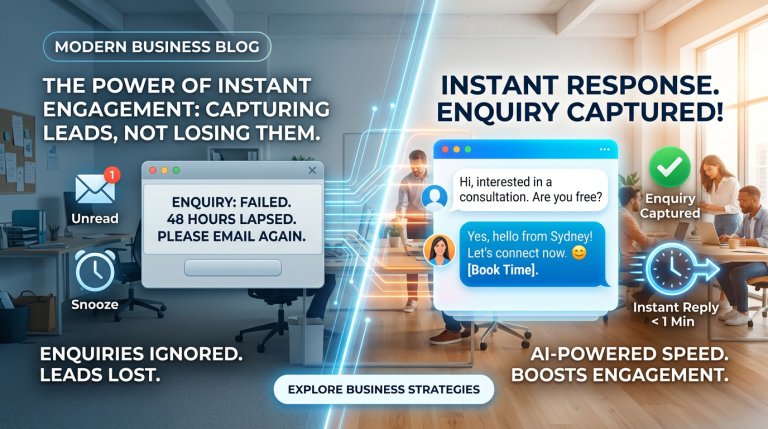
A great deal of marketing work is repetitive and rule-based, the kind that consumes time without requiring much judgement. Following up with leads, sending reminders, posting consistently, compiling reports, nurturing prospects. In a lean team, systems and automation handle this work reliably and at scale, so people do not have to.
This frees an enormous amount of time and removes the inconsistency that creeps in when busy people handle routine tasks manually. The systems become a tireless extra team member, doing the repetitive work perfectly every time, which is exactly the kind of work that drags down a small team trying to do everything by hand.
AI accelerates the heavy lifting
Where systems handle the repetitive, AI accelerates the demanding. Drafting content, researching, summarising, analysing data, generating ideas and variations, all of this can be done far faster with AI assistance, with a skilled person guiding and refining the output.
This does not replace the marketer’s judgement or voice, but it dramatically speeds up the work around it, so a small team can produce far more. The key is that AI is used as an amplifier of skilled people, not a substitute for them. A lean team uses AI to do in hours what once took days, then applies human judgement to make the output genuinely good, which is where the real value lies. With more than four in ten Australian SMEs already using AI, the businesses that learn to apply it well, rather than just dabble, gain a real edge over those that do not.
People focus where they matter most
The point of all this leverage is not to remove people, but to free them for the work only people can do well. When systems handle the repetitive and AI accelerates the heavy lifting, the team’s time and energy go to strategy, creativity, judgement and relationships, the high-value work that genuinely drives results and that machines cannot replicate.
This is what makes a lean team so effective. Its people are not buried in routine tasks. They are focused on the things that matter most, supported by systems and AI that handle everything else. A small team of skilled people, freed to focus and supported by good leverage, is a formidable combination.
A practical example
Consider two businesses with similar marketing needs. The first builds a large marketing team to handle everything manually, with people spending much of their time on repetitive follow up, reporting, posting and routine production. It is expensive, and despite the headcount, output is inconsistent because so much depends on busy people remembering and finding time.
The second builds a lean team supported by systems and AI. Automation handles its follow up, reminders and reporting reliably. AI accelerates its content drafting, research and analysis, guided by its people. Clear processes ensure good work repeats. As a result, its small team produces more content, more consistent follow up, and faster, better-informed decisions than the larger team, at a fraction of the cost. Its people spend their time on strategy and creativity rather than routine tasks, so the work is not only more efficient but often better. The second business proves that with the right leverage, a lean team can outperform a much larger one. It is not doing less. It is doing more, by building a machine of systems and AI around a few skilled people.
A caution: adopt with intent
The adoption numbers come with a warning worth heeding. Australian commentary on the SME AI surge has repeatedly noted that usage is rising faster than proven results, as many businesses adopt tools without a clear plan for value. The lesson for a lean team is to adopt with intent. Fix and map your processes before you automate them, use AI to amplify skilled people rather than to mass-produce generic work, and measure the time and results you get back. Leverage only pays off when it is applied to a process that works.
How Webrr Digital can help
Webrr Digital helps businesses grow through practical digital systems that bring together websites, SEO, AI visibility, automation and advertising. For lean teams, we build the systems and AI-assisted workflows that handle the repetitive work and accelerate the heavy lifting, so your people can focus on strategy and growth. If you want to do more with a small team, our marketing automation and digital growth strategy services are built for exactly that.
Frequently asked questions
Do I need a big team to market my business well?
Where does a lean team’s advantage come from?
Does AI replace the marketing team?
Why do so many businesses adopt AI but see little return?
What should a small business automate first?
Ready to do more with a lean team?
A small team with the right systems and AI can deliver results that look like those of a much larger one. If you want to build that leverage into your business, the Webrr Digital team can help you do more with less.