


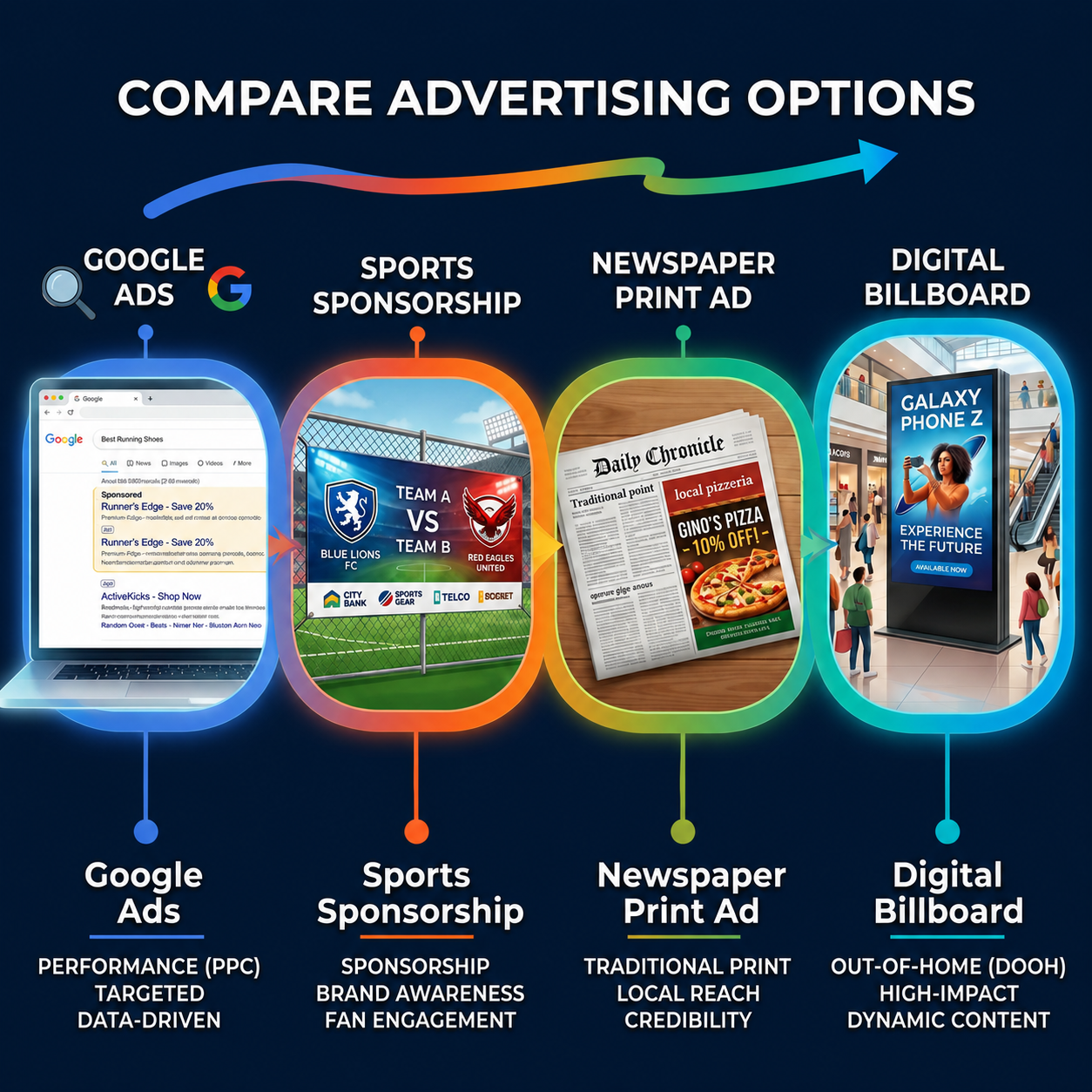
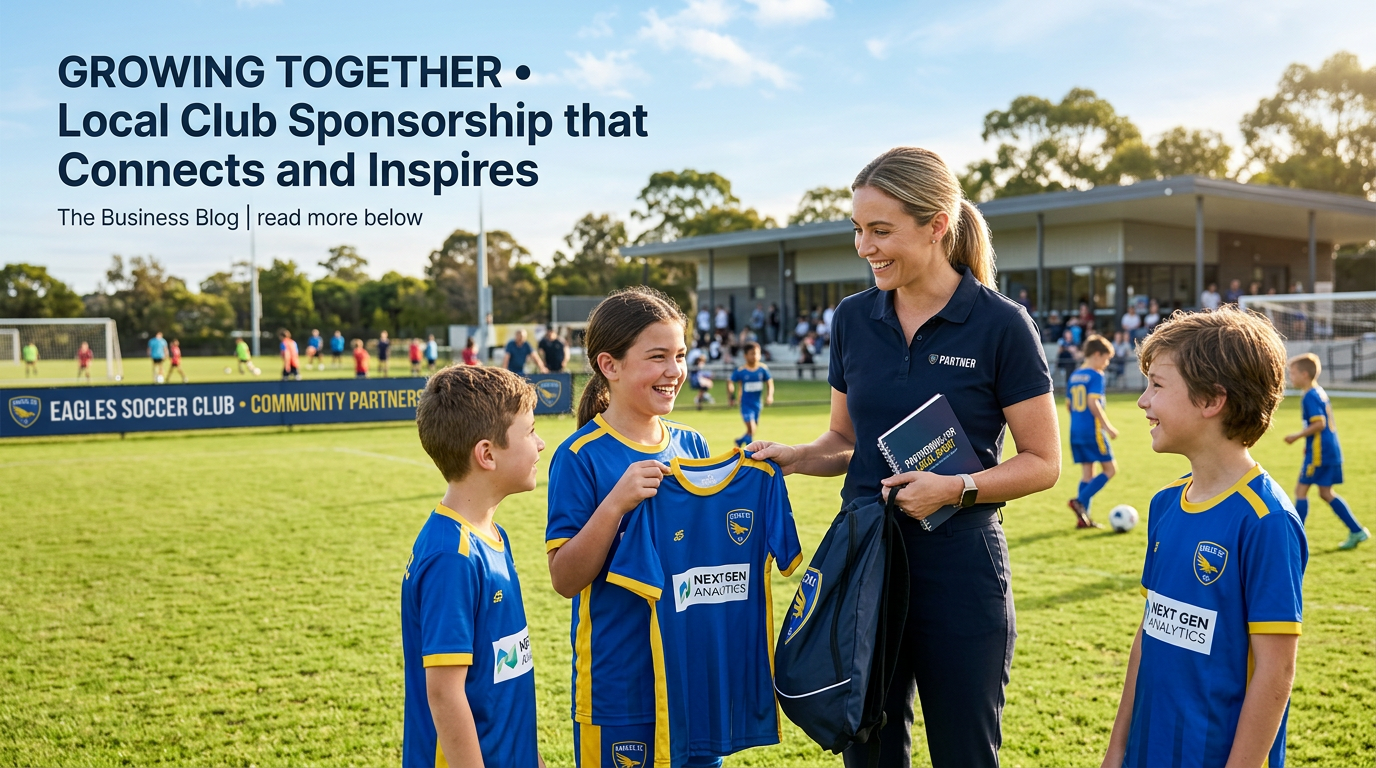
Sponsoring a local sporting club feels good. You support your community, your name goes on a banner or a jersey, and you tell yourself it is good for business. But is it actually worth the money, or is it just a feel-good donation with a logo attached? The honest answer is that it depends entirely on how you set it up, and most businesses set it up in a way that almost guarantees a poor return. Done deliberately, community sponsorship can be a genuinely powerful marketing channel that builds trust no advertisement can buy. Done passively, it is money on a sign that nobody remembers.
This guide looks at when sponsorship works, why it works, where it goes wrong, and how businesses can make sure theirs actually delivers.
Why sponsorship can work so well
People prefer to buy from businesses they recognise and trust, and a local club is a trusted institution at the heart of its community. When your business is visibly part of that community, you borrow some of that trust. Familiarity builds quietly over a season, so that when a member or family needs what you offer, you are the name that already feels safe and familiar rather than a stranger found through a search. This is especially valuable for local service businesses, where most customers come from the surrounding area. Sponsorship puts you in front of exactly those people, wrapped in the goodwill of an institution they already care about, which is a kind of trust that advertising alone struggles to buy.
Why most sponsorships fail
Despite that potential, most sponsorships disappoint, and the reason is almost always the same. The business pays for the sponsorship, puts its logo on the signage, and then does nothing else. It treats sponsorship as a passive placement rather than an active channel. A logo on a sign creates a little awareness, but on its own it rarely drives any enquiries, because it gives people no reason to act and no easy way to get in touch. So the business sees no traceable return, concludes sponsorship does not work, and either stops or keeps donating out of goodwill. The failure is not in the sponsorship itself. It is in the passivity around it. The businesses that get little are the ones that did little beyond paying.
Activation is the difference
The difference between a sponsorship that pays off and one that does not is activation, everything you do to turn the awareness and goodwill into real engagement. Instead of just placing a logo, you give the club’s community a reason to engage with your business and an easy way to do it. That might mean a relevant offer for members, showing up in person at club events to build genuine relationships, connecting the sponsorship to your digital presence so interested people can find you, and capturing the details of those who engage so you can follow up. Activation is what brings a sponsorship to life. It is the step passive sponsors skip, and it is precisely the step that turns money on a sign into enquiries and customers.
Choose the right club and terms
Not every sponsorship is equal, so it pays to be deliberate about which club and what terms. The best fit is a club whose community genuinely overlaps with your customers, so the people you reach are people who might actually need what you offer. It also helps to secure more than just signage, some access to the community, a chance to offer something to members, or a presence at events, so you have something to activate. A sponsorship that is purely a logo on a banner gives you little to work with, while one that includes real access to the community gives you the raw material to generate genuine engagement. Choosing the right club and negotiating terms you can activate sets the whole thing up to succeed.
Measure it like marketing, not charity
If you want to know whether a sponsorship is worth it, you have to treat it as marketing and set it up to be measured, rather than filing it under charity and hoping. Before committing, decide what a good return looks like and how you will detect it, a specific offer members can use, a trackable way to get in touch, or simply watching enquiries from the club’s community. Activated properly, a sponsorship produces signals you can read, engagement at events, use of an offer, enquiries you can trace to the club. Measuring it honestly tells you whether it is delivering and lets you decide with evidence whether to continue. This is the difference between a deliberate marketing investment and a well-meaning donation you can never really evaluate. A connected enquiry and follow-up system makes those signals easy to capture.
A practical example
Consider a local business sponsoring a popular sporting club. In its first year, it does what most do, pays the fee, puts its logo on the signage, and leaves it there. Members see the name occasionally, nothing prompts them to act, and the business can trace no enquiries to the sponsorship. It questions whether the money was worth it, and understandably so, because passively, it was not.
The next season, it activates instead. It negotiates terms that include access to the community, not just a logo. It offers members a genuinely valuable, relevant benefit, giving them a reason to engage. It makes getting in touch effortless and connects the sponsorship to its website. It shows up in person at club events, building real relationships. And it captures the details of those who engage and follows up. It also sets up simple ways to measure the response. This time the sponsorship generates a steady flow of enquiries from club members and their families, which it can actually trace and value. The sponsorship did not change from worthless to worthwhile by luck. The business changed it from a passive donation into an activated, measured marketing channel, and that made all the difference.
How Webrr Digital can help
Webrr Digital helps businesses grow through practical digital systems that bring together websites, SEO, AI visibility, automation and advertising. For community sponsorship, we help you choose the right club and terms, activate the sponsorship with a real reason to engage, connect it to your digital presence, and measure the return, so it drives enquiries rather than sitting as a logo on a sign. If you want sponsorship that actually pays off, our sporting club sponsorships service is built for it.
Frequently asked questions
Is sponsoring a local sporting club worth it?
Why do most sponsorships fail?
What does activating a sponsorship mean?
How do I choose the right club?
How do I measure sponsorship return?
Want sponsorship that actually pays off?
Activated and measured, community sponsorship is a genuine marketing channel. If you want help making yours deliver, the Webrr Digital team can show you how.